
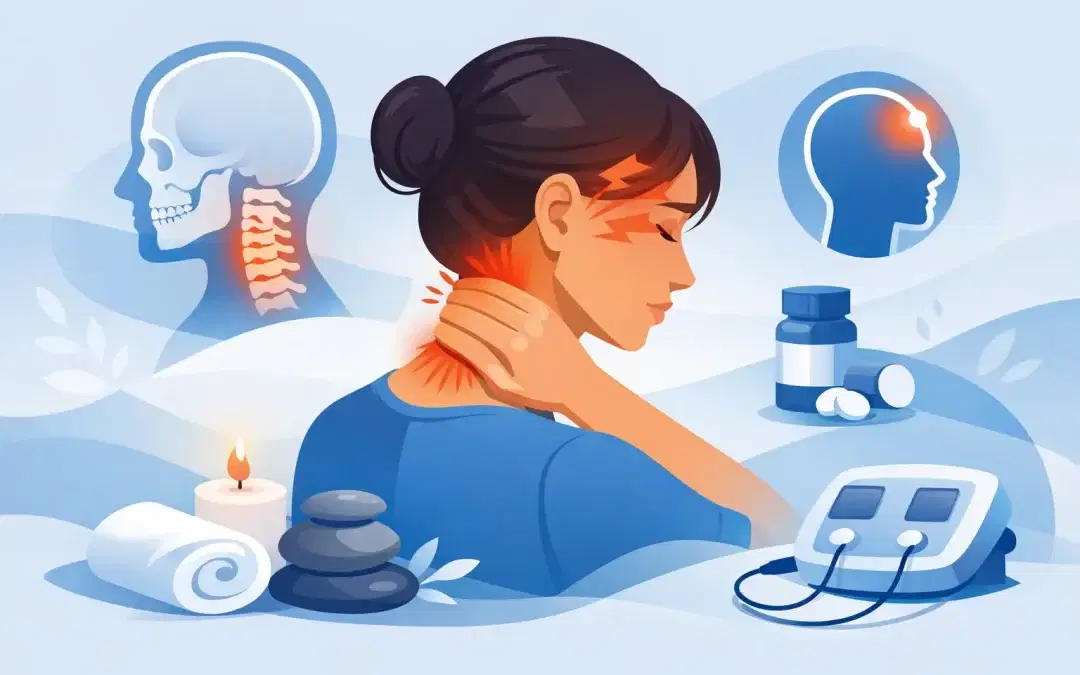
A headache that starts at the base of the skull, spreads towards the temple or sits behind one eye can make a normal working day feel much longer. Treatment for neck pain headaches is not about simply easing the pain for a few hours. It should look at what is irritating the neck, how you are moving, and whether there are signs that need medical assessment first.
Neck-related headaches are common, particularly for people who spend long periods at a desk, drive for work, carry out physical work, or notice their neck stiffens after exercise. They can also develop after a fall, a sporting injury or an awkward night’s sleep. The encouraging news is that many people improve with a considered plan that combines hands-on treatment, practical movement advice and enough time for the irritated tissues to settle.
When can the neck cause a headache?
The upper part of the neck shares nerve pathways with the head and face. When joints, muscles or other structures in this area are irritated or not moving comfortably, pain can be felt as a headache. This is often called a cervicogenic headache.
A neck-related headache commonly begins in the neck or just below the skull and may travel up one side of the head. Turning the head, looking down for a long time, holding the phone between shoulder and ear, or sitting in one position can make it worse. The neck may feel stiff, tender or restricted, and some people notice pain around the shoulder blade as well.
However, not every headache with neck pain comes from the neck. Migraine can cause neck stiffness, and tension-type headaches, sinus symptoms, jaw clenching, eye strain, poor sleep and stress can all contribute. That is why a proper assessment matters. The aim is to avoid assuming that every sore neck needs the same treatment.
Treatment for neck pain headaches starts with assessment
A patient-centred assessment should begin with the detail that is often missed when people try to manage the problem alone. When did the pain begin? Was there an injury? Where does the headache start and travel? Is it linked to particular movements, work tasks, sleep positions or exercise? Has it changed recently?
An osteopath or other suitably qualified primary healthcare practitioner may assess neck movement, posture, muscle tenderness, shoulder function and the upper back. They will also consider factors outside the neck, such as repetitive lifting, a poorly arranged workstation, stress, jaw tension or reduced activity following an injury.
This assessment helps shape a plan around the individual rather than a standard set of exercises. For one person, the main issue may be a stiff upper back after long days at a computer. For another, it may be protective muscle tension after a minor road traffic accident. The right approach depends on the findings, your medical history and how symptoms respond over time.
Hands-on care and movement can work well together
For suitable patients, osteopathic treatment may include gentle joint mobilisation, soft-tissue techniques and work to improve movement through the neck, upper back and shoulders. Treatment should be explained clearly and adapted to your comfort. It should not be a test of how much discomfort you can tolerate.
Hands-on care can help reduce muscle guarding and make movement easier, particularly when the neck has become painful and stiff. Yet it is usually more effective when paired with advice that helps you stay comfortable between appointments. That may include pacing repetitive tasks, changing your working position, returning gradually to exercise or using simple mobility work.
Massage can also be useful where muscular tension is a major feature, especially around the upper shoulders, base of the skull and upper back. It can be a helpful part of a wider plan, but it is not always the complete answer if restricted movement, workload, sleep or a recurrent injury is continuing to aggravate the area.
Exercises do not need to be complicated to be worthwhile. Depending on the assessment, they may focus on gently improving neck rotation, building control of the deep neck muscles, strengthening the upper back, or restoring shoulder movement. The best exercise is one you can do consistently without flaring symptoms. Pushing through sharp pain, or copying an exercise programme that was designed for somebody else, can delay progress.
Everyday changes that often make a difference
There is no single perfect posture. Trying to sit ramrod-straight for eight hours can be just as unhelpful as slumping. The more useful goal is variety. Change position regularly, stand up between tasks and avoid staying with your head turned or bent forward for long periods.
If you use a laptop for most of the day, raising the screen and using a separate keyboard and mouse can reduce the amount of time your neck spends looking down. Drivers may benefit from adjusting the seat and mirrors so they do not have to crane forwards. For manual workers, the answer may be changing how a load is positioned, taking sensible movement breaks or rebuilding capacity after time away from physical work.
Sleep is another common factor. A pillow does not need to be expensive, but it should support the head without pushing the neck too far up or letting it drop to one side. Side sleepers often need enough height to fill the space between shoulder and head, while back sleepers may prefer a lower pillow. If a new pillow makes symptoms clearly worse after a reasonable settling period, it is unlikely to be right for you.
Stress does not mean neck pain is imagined. It can, however, increase jaw clenching, shallow breathing and muscle tension, while poor sleep can lower the threshold at which pain feels overwhelming. Addressing these factors alongside physical treatment is practical healthcare, not an afterthought.
When should you seek urgent help?
Most neck pain headaches are not a medical emergency, but a new, severe or unusual headache should never be ignored. Seek urgent medical advice, or emergency help where appropriate, if you experience:
- a sudden headache that reaches maximum intensity very quickly, particularly if it is unlike previous headaches;
- headache with weakness, numbness, facial drooping, difficulty speaking, confusion, fainting or a new loss of balance;
- fever, a rash, severe neck stiffness, sensitivity to light or feeling seriously unwell;
- headache after a significant head or neck injury;
- new headache with visual loss, double vision, persistent vomiting, seizures, or a marked change in your usual headache pattern.
It is also sensible to speak to a GP or appropriate clinician if headaches are becoming more frequent, pain relief is needed often, or the problem is affecting sleep, work or daily life. If you are pregnant, have a history of cancer, inflammatory disease, osteoporosis, take blood-thinning medication, or have recently had a significant injury, these details should form part of the assessment.
What does a realistic recovery look like?
Some people feel easier after their first appointment because movement has improved and muscle tension has reduced. Others need longer, particularly if symptoms have been present for months or the neck is repeatedly aggravated by work demands. Improvement is rarely a perfectly straight line. A busy week, poor sleep or an unfamiliar activity can produce a temporary setback without meaning the plan has failed.
A good treatment plan has a clear purpose. Early appointments may focus on calming pain and restoring comfortable movement. As symptoms settle, the emphasis often shifts towards confidence, strength and returning to the activities that matter to you. Repeat treatment can be appropriate for recurrent problems, but it should be based on clinical need and your goals, not pressure to keep booking indefinitely.
At The Wellhead Practice, treatment is planned around the person in front of us, whether that means help after a flare-up, support returning to sport or physical work, or sensible maintenance for a recurring issue. You do not need a GP referral to seek private assessment.
If your headache seems tied to neck stiffness or movement, getting it assessed early can prevent a manageable problem becoming a cycle of pain, missed activity and reliance on short-term fixes. The useful next step is not to chase a quick cure, but to understand what your neck needs to move comfortably again.