
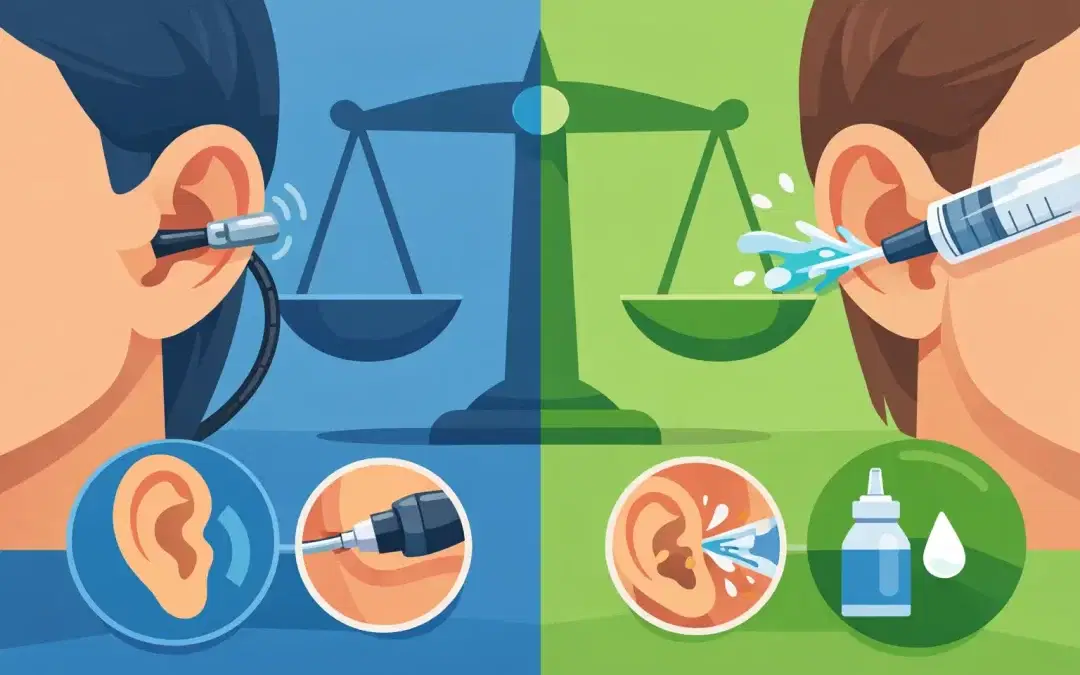
A blocked ear can make everyday conversation strangely tiring. Your own voice may sound loud or hollow, the television creeps up in volume, and hearing aids can become less effective. When people ask about microsuction versus ear syringing, they usually want a simple answer: which one will clear the wax safely and comfortably?
The honest answer is that it depends on your ears, the type of wax present and your medical history. Both methods can be effective when used appropriately by a trained clinician. The right appointment starts with looking in the ear, asking the right questions and choosing the method that suits you – rather than applying the same approach to everyone.
Microsuction versus ear syringing: the key difference
Microsuction removes wax using a small, gentle suction device. The clinician looks into the ear canal using magnification and light, then carefully lifts or draws out the wax. It is a dry technique, meaning no water is put into the ear.
Ear syringing is the term many people use for ear irrigation. Modern irrigation usually involves a controlled flow of warm water to loosen and wash wax from the ear canal. It should not be confused with trying to flush an ear at home using improvised equipment. Professional irrigation is carried out after an ear examination and with suitable equipment.
The main practical difference is visibility and water. With microsuction, the clinician can see the wax as it is removed and work in a dry ear canal. With irrigation, softened wax is encouraged out using water at a safe, controlled temperature and pressure. Neither method is automatically best for every person.
What should happen before wax removal
A proper ear-wax appointment is more than the removal itself. Before treatment, a clinician should examine both ears and discuss your symptoms, including any ear pain, discharge, dizziness, recent infection or sudden change in hearing.
They should also ask about previous ear surgery, perforated eardrums, grommets and relevant health conditions. This matters because certain histories can make irrigation unsuitable, while others may mean that wax removal should be delayed or assessed through a different healthcare route.
Sometimes the answer is not to remove wax at all. A feeling of blockage can be caused by infection, fluid behind the eardrum, skin irritation or a hearing issue unrelated to wax. Looking first helps avoid unnecessary treatment and ensures the next step is appropriate.
Why many people choose microsuction
Microsuction is often preferred because it is precise and does not introduce water into the ear. For people who have had problems with irrigation before, are prone to outer-ear infections or simply dislike the idea of water in their ears, this can be reassuring.
It can also be useful where wax is close to the eardrum or where the clinician needs a clear view throughout treatment. The appointment is often quick once the wax is suitably softened, although very hard or deeply impacted wax may need more time or a second visit.
Comfort is individual. Some people notice a loud sucking sound or a brief pulling sensation during microsuction. Others find it more comfortable than irrigation because there is no feeling of fullness from water. A good clinician will explain what they are doing, work carefully and pause if you need a break.
Microsuction is not a guarantee that every ear can be cleared immediately. Wax that is very dry, hard or tightly packed can be difficult to remove safely in one sitting. In those circumstances, using olive oil drops for a few days beforehand, if appropriate for you, may make removal easier.
When ear irrigation can be a good option
Professional ear irrigation remains a helpful treatment for many people, particularly where wax has been softened and there is no medical reason to avoid water in the ear. It can clear larger amounts of soft wax effectively and is familiar to patients who have had it successfully in the past.
The water used should be close to body temperature. Water that is too cool or too warm can trigger short-lived dizziness, which is one reason professional technique and equipment matter. You may hear water moving in the ear and feel a gentle pressure, followed by relief as the blockage clears.
Irrigation is not usually suitable for everyone. It must be avoided if you have a known or suspected eardrum perforation, grommets, a history of certain ear operations, a current ear infection or unexplained ear symptoms. This is why an individual assessment matters more than a one-size-fits-all preference.
Safety depends on your ear, not just the method
Both microsuction and irrigation have a strong safety record when carried out by trained practitioners who assess the ear first. However, no wax-removal procedure is entirely without risk. The ear canal is delicate, and hard wax can sit close to sensitive skin or the eardrum.
Let the clinician know before your appointment if you have had ear surgery, repeated ear infections, tinnitus that has recently changed, vertigo, diabetes, immune-system problems or use hearing aids. These details help them decide whether treatment can go ahead and how best to proceed.
Do not assume a blocked ear is simply wax if you have severe pain, discharge, bleeding, a sudden loss of hearing, facial weakness or significant dizziness. These symptoms need prompt medical assessment rather than routine wax removal.
It is also worth avoiding cotton buds. They tend to push wax further down the canal and can scratch the skin, making removal more difficult. Ear candles are not a safe or effective solution and can cause burns or leave debris in the ear.
Which method feels more comfortable?
There is no universal winner. Many patients find microsuction more comfortable because it is dry and carefully targeted. Others prefer irrigation because it can feel less noisy and less direct. Anxiety, the amount of wax and the sensitivity of your ear canal all influence the experience.
The clinician’s approach matters just as much as the equipment. Clear explanations, an unhurried examination and permission to pause can make treatment feel far more manageable. If you are nervous, say so at the start. There is no benefit in forcing a procedure that feels too uncomfortable.
Preparing for your appointment
If you have been advised to use olive oil drops, use them as directed before your visit. They can soften wax and may improve the chance of a comfortable, successful removal. Do not use drops if you know you have a perforated eardrum, grommets or a history of ear surgery unless a suitable clinician has advised you to do so.
Keep the outside of the ear clean, but do not put anything down the canal. Bring your hearing aids if you wear them, as it can be useful to check how your hearing feels once the wax has been removed. If your symptoms have changed since booking, mention this before treatment begins.
At The Wellhead Practice, ear-wax removal is approached as a patient-centred service: your ears are examined first, and microsuction or ear irrigation is chosen only when it is clinically suitable. There is no advantage in recommending a method that is not right for your history or the condition of your ears.
The best choice is the one that clears your wax safely, with the least discomfort and the right clinical judgement behind it. If your hearing feels dulled or your ear remains blocked, arranging a professional assessment can replace guesswork with a clear, practical next step.