
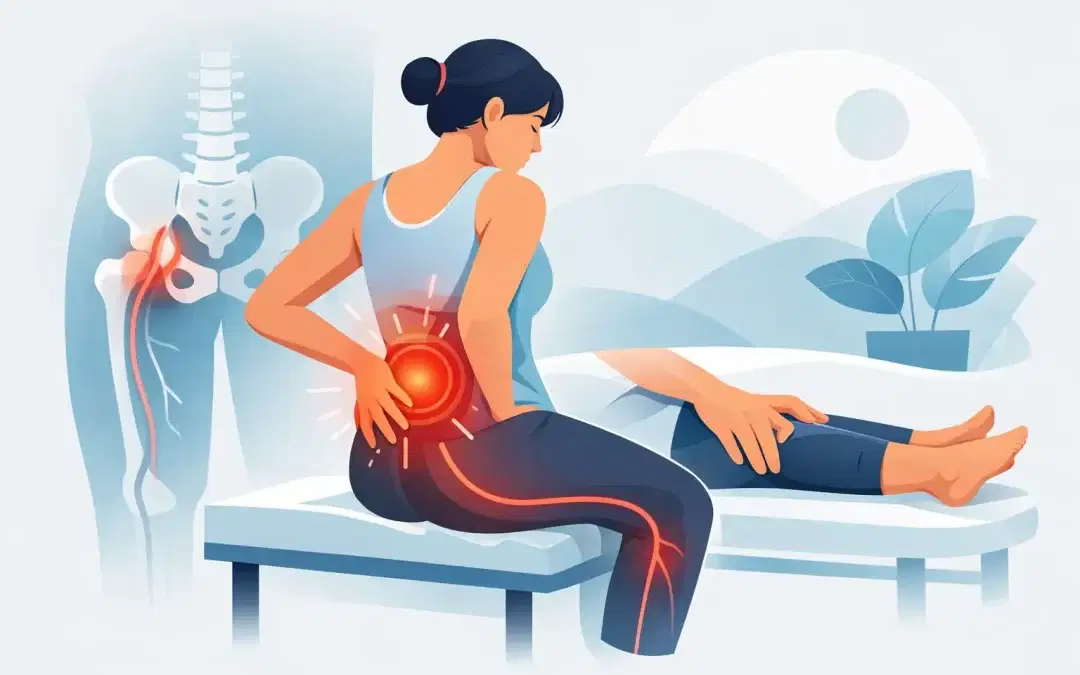
Sciatica can make ordinary jobs feel unexpectedly difficult. Getting out of the car, putting on socks, sitting through a meeting or sleeping comfortably may all become a problem when pain travels from the lower back into the buttock and leg. So, can osteopathy help sciatica? For many people, it can be a useful part of managing symptoms – particularly where pain, stiffness and reduced movement are keeping them from normal daily life. The right approach depends on what is causing the symptoms, how severe they are and whether there are any warning signs that need urgent medical attention.
What sciatica actually means
Sciatica describes irritation or compression of the sciatic nerve, or of the nerve roots that form it in the lower back. It is not a diagnosis in itself. The familiar pattern is pain that starts in the lower back or buttock and runs down one leg. Some people feel a sharp, shooting pain; others describe burning, tingling, numbness or a deep ache.
A common cause is a disc in the lower back irritating a nerve root. Age-related changes to the spine, narrowing around the nerves, arthritis, muscle tension and certain movements or positions can also contribute. Occasionally, symptoms that feel like sciatica have another source, such as a hip problem or referred pain from surrounding joints and tissues. That is why a proper assessment matters before deciding on treatment.
Sciatica often settles gradually, but it can be very uncomfortable while it does. Pain may fluctuate from day to day, and complete rest is not always the answer. Staying gently active, within comfortable limits, is often more helpful than avoiding all movement for weeks.
Can osteopathy help sciatica?
Osteopathy cannot promise to remove every cause of sciatica, and it is not a substitute for medical assessment where symptoms are severe or unusual. However, osteopathic care may help reduce pain, ease protective muscle tension and improve movement around the lower back, pelvis and hips. This can make it easier to stay active and return to the activities that matter to you.
An osteopath will look beyond the point where the pain is felt. For example, a person whose leg pain began after lifting at work may be moving differently through their lower back and hip because of pain and guarding. Someone else may have symptoms that worsen after long periods of sitting, driving or gardening. Understanding these patterns helps guide a patient-centred treatment and management plan.
Hands-on treatment may include gentle joint mobilisation, soft-tissue techniques and, where appropriate, manipulation. The aim is not simply to ‘put something back in place’. It is to help the body move more comfortably, reduce sensitivity in tight or overloaded tissues and support a gradual return to normal function. Treatment should be adapted to the individual, including their age, general health, level of pain and confidence with movement.
For some people, improvement is noticeable after a small number of appointments. Others need a more gradual programme, particularly if symptoms have been present for a long time or there are ongoing demands from work, caring responsibilities or sport. Ethical care means recommending only what is clinically appropriate, rather than committing you to treatment you do not need.
A thorough assessment comes first
Before treatment begins, an osteopath should take a detailed case history and examine how you move. They may ask when the pain started, whether it came on suddenly or gradually, what aggravates it, and whether you have tingling, numbness or weakness in the leg or foot.
The assessment may include checking spinal and hip movement, muscle strength, reflexes and sensation. These checks help distinguish a straightforward presentation from one that needs onward referral or further investigation. If hands-on treatment is suitable, the clinician should explain what they are doing, why they recommend it and what you may reasonably expect afterwards.
At The Wellhead Practice, this kind of careful assessment is central to providing evidence-based, individual care. Being able to self-refer for a private appointment can also mean getting timely advice when pain is starting to limit work, sleep or mobility.
Treatment is usually more than hands-on work
The most useful care plan for sciatica normally combines treatment with practical advice. The exact advice will vary, but it may include guidance on sitting, sleeping positions, pacing activities and finding ways to keep moving without repeatedly flaring the pain.
You may be given simple exercises to improve mobility, build tolerance and restore strength. These should be realistic for your starting point. When the leg is very painful, the first goal may simply be short, regular walks and comfortable movement. As symptoms settle, the focus can shift towards strengthening, lifting confidence and returning to exercise, work or hobbies.
This matters because sciatica is rarely solved by one treatment session alone. A hands-on appointment may help create a window where movement feels easier. What happens between appointments – sensible activity, gradual progression and avoiding long periods of complete inactivity – often has a significant effect on recovery.
There can also be trade-offs. Pushing through severe pain to continue a demanding gym routine or physical job may aggravate symptoms, but stopping all activity can lead to more stiffness, fear and loss of strength. An osteopath can help you find the middle ground: enough movement to support recovery, without ignoring your body’s limits.
When osteopathy may be less suitable
Sciatica should not be treated as something to simply ‘work through’ if there are concerning symptoms. Seek urgent medical attention if you develop new difficulty controlling your bladder or bowels, numbness around the genitals or buttocks, or rapidly worsening weakness in one or both legs. These can be signs of a rare but serious condition requiring urgent assessment.
You should also speak to a clinician promptly if pain follows a significant accident, you have a history of cancer, unexplained weight loss, fever, feel generally unwell, or your pain is severe and unrelenting. An osteopath can recognise when referral is needed, but do not delay seeking help if you are worried.
If you have mild pins and needles or intermittent numbness, this does not automatically mean something serious is happening. It does, however, make a proper assessment particularly worthwhile. The same is true if your foot feels weak, you are tripping more often, or symptoms are not improving over time.
What to expect after an appointment
Many people feel looser or more comfortable after treatment, though it is possible to feel temporarily sore or tired for a day or two. This is usually mild and settles quickly. Your osteopath should tell you what is normal after treatment and what would warrant getting back in touch.
Progress is not always a straight line. A good week may be followed by a flare-up after a long journey, a busy shift, housework or an awkward lift. That does not necessarily mean you are back at square one. Looking at the overall trend – whether you can walk further, sit longer, sleep better or rely less on pain relief – provides a clearer picture than judging recovery by one difficult day.
If you are using medication for pain, continue to follow the advice of your GP, pharmacist or prescribing clinician. Osteopathy can sit alongside other appropriate care, including physiotherapy, medical assessment and, where necessary, specialist referral.
Getting back to normal movement
Sciatica can be unsettling, especially when the pain shoots down the leg without warning. But most people do not need to put life entirely on hold. Early assessment, sensible pacing and a plan tailored to your body can make the condition feel much more manageable.
The most helpful next step is often a calm conversation with a qualified clinician who can assess your symptoms properly, explain what may be contributing and help you move forward at a pace that feels safe. The goal is not just a quieter back or leg today, but the confidence to get back to the work, walks, family time and everyday routines you enjoy.