
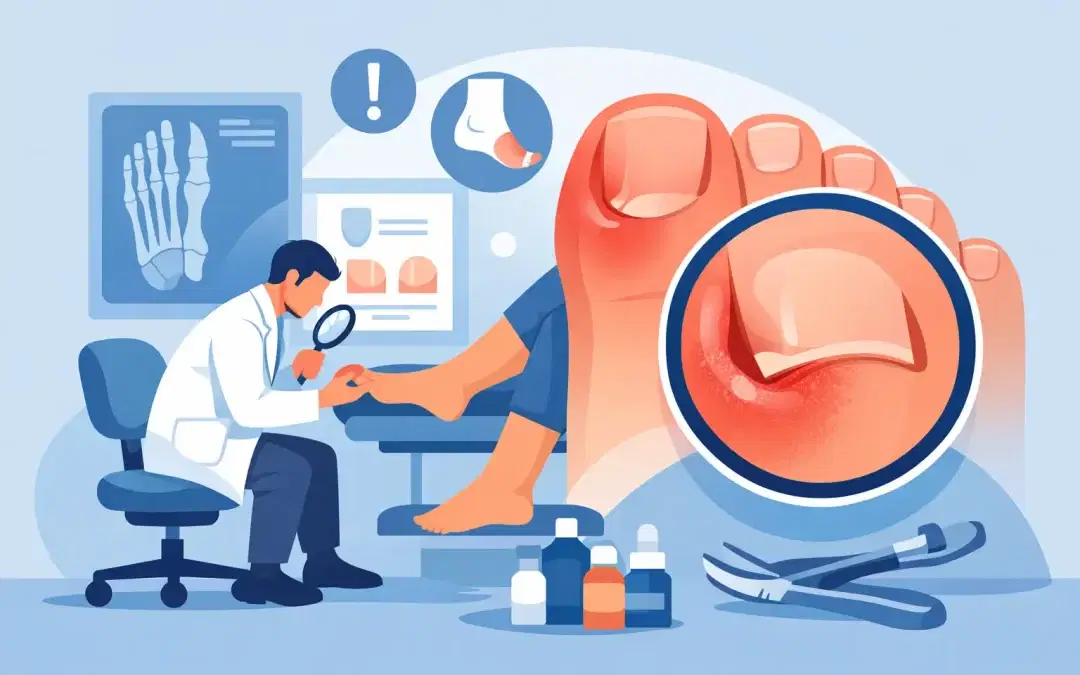
A sore big toe can make a normal working day, dog walk or gym session surprisingly difficult. If the edge of a nail is pressing into the skin, a podiatrist for ingrown toenails can assess the problem early, relieve the pressure and help prevent it becoming a recurring source of pain.
Ingrown toenails are common, but they are not something you simply have to put up with. Some mild cases settle with careful self-care. Others need professional treatment, particularly when the toe is inflamed, infected or repeatedly troublesome. The right approach depends on what is happening around the nail, how long it has been present and your wider health.
What is an ingrown toenail?
An ingrown toenail occurs when the side or corner of a nail grows into, or presses hard against, the surrounding skin. It most often affects the big toe. The pressure irritates the skin and can lead to redness, swelling and tenderness. If the skin is broken, bacteria can enter and cause infection.
At first, it may feel like a small sharp point when you put shoes on. As the area becomes more inflamed, even bedding, socks or a light knock can be uncomfortable. Some people notice fluid or pus, while others develop excess red tissue around the nail edge. This is often called granulation tissue and is a sign that the toe has been irritated for some time.
A nail does not need to look dramatically curved to cause trouble. Sometimes the issue is a tiny nail spike hidden at the corner. In other cases, a naturally curved or thickened nail repeatedly presses into the skin.
Why ingrown toenails happen
There is rarely one single cause. Cutting toenails too short, or rounding deeply into the corners, can leave a sharp edge that grows into the skin. Tight footwear can compress the toes, particularly with safety boots, narrow shoes and some sports footwear.
Injury can also alter how the nail grows. Repeated pressure from running, football or other activities may play a part, while a direct knock can damage the nail. Some people are simply more prone to the condition because of their nail shape, toe shape or family history.
Sweaty feet, fungal nail changes and difficulty reaching the feet can make routine nail care harder. This is especially relevant for older adults or anyone with reduced mobility. The aim is not to blame yourself for the problem, but to identify the likely triggers so treatment has the best chance of lasting.
When home care may be reasonable
If discomfort is mild, the skin is intact and there are no signs of infection, a few days of gentle care may be appropriate. Keep the foot clean and dry, wear footwear with plenty of room in the toe box, and avoid digging at the nail corner. A warm salt-water foot bath can soothe the area, provided the skin is not badly broken or weeping.
Do not attempt to cut down the side of the nail, use a blade to remove a corner, or push objects beneath it. These methods can leave a sharper fragment behind, injure the skin and make infection more likely. Cotton wool placed under a nail edge is sometimes suggested, but it can be difficult to do safely and is not suitable when the toe is already very sore or inflamed.
It is sensible to seek advice if the pain is not improving after a few days, the problem keeps returning, or you cannot comfortably wear your usual footwear. Prompt care is generally simpler than waiting until the toe becomes acutely painful.
When to see a podiatrist for ingrown toenails
Professional assessment is advisable when there is increasing redness, swelling, heat, bleeding, discharge or throbbing pain. You should also arrange an appointment if there is a visible nail spike, overgrown skin around the nail, or recurrent episodes on the same toe.
A podiatrist can examine the nail and surrounding tissue, then explain which treatment is appropriate. This may involve carefully removing the offending nail edge or nail spike and clearing debris from the area. For many people, this brings quick relief because the source of pressure has been removed.
Treatment is patient-centred and based on what the toe needs. A first, straightforward episode may respond well to conservative care and advice on nail cutting and footwear. If the nail repeatedly grows in at one or both sides, a more permanent procedure may be discussed. This usually involves removing a narrow section of nail under local anaesthetic and treating the nail root so that section does not grow back.
The idea of a nail procedure can sound daunting, but it is often less troublesome than living with repeated infections and pain. Your podiatrist should talk through the benefits, possible risks, aftercare and expected healing time before any decision is made. There is no value in recommending treatment that is not clinically needed.
Do antibiotics solve an ingrown toenail?
Antibiotics are not always needed. They may be appropriate where there is a spreading infection or where your medical history makes infection a greater concern, but they do not remove the nail edge causing the problem. If a nail spike remains in place, symptoms may continue or return once a course of antibiotics has finished.
This is why assessment matters. Removing the mechanical cause, while managing any infection properly, is often the most effective route back to comfortable walking.
Extra care for diabetes and poor circulation
People with diabetes, reduced circulation, nerve damage, immune suppression or a history of foot ulcers should not try to manage a suspected ingrown toenail themselves. Small breaks in the skin can become more serious in these circumstances.
Contact a suitably qualified healthcare professional promptly, especially if there is redness, swelling, discharge or a change in skin colour. If you feel unwell, develop rapidly spreading redness, or have severe pain with fever, seek urgent medical advice.
What happens at a podiatry appointment?
A podiatry appointment begins with a clear conversation about your symptoms, general health, footwear, work and activity levels. This helps the clinician understand whether the problem is a one-off irritation or part of a pattern.
The toe is then examined carefully. Where suitable, treatment may be carried out at the same appointment to remove the irritating section of nail. You will be given practical advice on keeping the area clean, dressing it if necessary, and choosing footwear that does not put pressure on the toe while it heals.
If a nail procedure is the best long-term option, the podiatrist will explain the process in plain English. Most people can return home shortly afterwards, although you may need to keep the foot elevated on the day and follow specific dressing instructions. Healing times vary, particularly if the toe was already inflamed, so it is worth allowing for this when planning work, sport or holidays.
At The Wellhead Practice, patients can self-refer for private podiatry care without needing to wait for a GP referral. The focus is on experienced assessment, evidence-based treatment and only the follow-up appointments that are genuinely required.
Reducing the chance of another ingrown toenail
Once the toe is settled, small changes can make a meaningful difference. Cut toenails straight across rather than rounding the corners. Do not cut them excessively short, and use clean, suitable nail clippers rather than tearing or picking at the nail.
Footwear should allow the toes to sit naturally without being squeezed together. This matters for everyday shoes, but also for work boots and sports shoes. If a particular pair repeatedly makes the same toe sore, the fit is unlikely to improve with time.
If your nails are thick, curved or difficult to manage safely, routine podiatry appointments can be a sensible preventative measure. This is not about unnecessary treatment. It is about avoiding the discomfort, lost sleep and restricted mobility that can follow when a small nail problem is left to worsen.
A painful toe should not dictate how far you walk, what shoes you wear or whether you can get through a busy day comfortably. Early, practical podiatry care can often get you back on your feet with far less fuss than you might expect.