
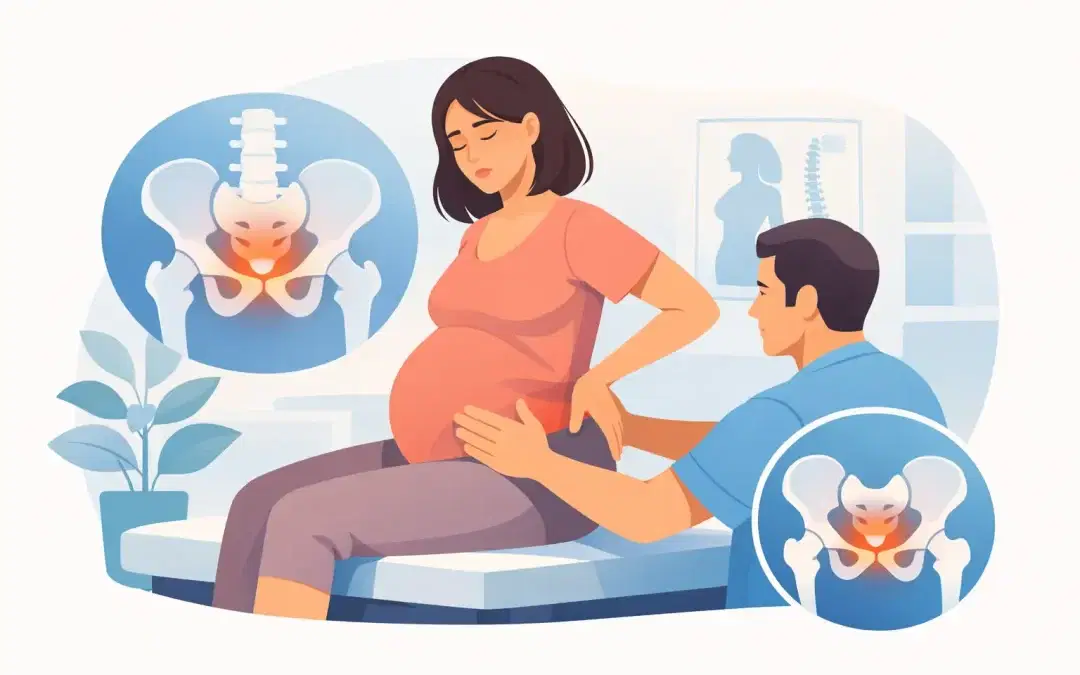
Pelvic pain can make ordinary parts of pregnancy unexpectedly difficult. Getting out of the car, rolling over in bed, climbing stairs or keeping up with work and family life may all start to feel like a calculation. If you are considering osteopathy during pregnancy, pelvic pain may be the reason you want practical, hands-on support that takes your comfort and safety seriously.
Pregnancy-related pelvic pain is common, but that does not mean you should simply put up with it. A careful assessment can help identify the movements, loads and habits aggravating your symptoms, while offering sensible ways to stay as active and comfortable as possible.
What does pregnancy-related pelvic pain feel like?
Pelvic girdle pain, sometimes called PGP, is a term used for pain around the pelvis during pregnancy. It may be felt at the front of the pelvis around the pubic bone, across the lower back, in the buttocks, hips, groin or upper thighs. Some people describe a catching, aching or sharp sensation; others feel stiffness, instability or discomfort after being on their feet.
Symptoms often become more noticeable when you are walking, standing on one leg to get dressed, lifting a toddler, getting in or out of bed, or turning in bed. They can vary from mild and manageable to severe enough to affect sleep, work and confidence with movement.
There is rarely one simple cause. Pregnancy changes the way load is carried through the body as your bump grows, your posture adapts and muscles work differently. Previous back, hip or pelvic problems, a physically demanding job, caring responsibilities and reduced opportunity to rest can all influence how symptoms feel. Every pregnancy is different, so a treatment plan should be individual too.
Osteopathy during pregnancy for pelvic pain
Osteopathy is a form of hands-on care that looks at how your joints, muscles and soft tissues are moving and coping together. For pelvic pain in pregnancy, an osteopath will not try to force the pelvis into a supposed “correct” position. Instead, the focus is on understanding your symptoms, reducing avoidable strain and helping you move with more comfort and confidence where appropriate.
Your appointment should begin with a detailed conversation. This includes where the pain is, when it began, what makes it worse or better, your stage of pregnancy, medical history and any advice already given by your midwife, GP or maternity team. The osteopath may assess how you stand, walk and move, always adapting this to what is comfortable and suitable for you.
Treatment is generally gentle and tailored. It may involve carefully applied soft-tissue techniques, movement of areas such as the back, hips or ribcage, and advice on positions and day-to-day activity. The aim is not to make promises about a pain-free pregnancy. It is to help reduce muscle tension and movement restriction that may be contributing to discomfort, while giving you useful strategies between appointments.
For some people, hands-on treatment feels most helpful alongside practical changes to how they move. For others, advice, pacing and targeted exercises may make the greater difference. A good clinician will explain what they are doing, check your response throughout and recommend only the care that is clinically appropriate.
What a pregnancy osteopathy appointment should include
Pregnancy is not a reason to avoid all manual therapy, but it is a reason for care to be properly adapted. Your comfort comes first. You may be assessed seated, standing or lying in supported positions, rather than being asked to tolerate an uncomfortable posture. As pregnancy progresses, side-lying and seated treatment are often more suitable than lying flat.
A patient-centred appointment also leaves room for the realities of daily life. If you work on your feet, sit at a desk, drive regularly, have other children to lift or are struggling to sleep, these details matter. Advice that only works in an ideal routine is unlikely to help for long.
You should expect clear communication about what osteopathy may and may not be able to help with. It can be a useful part of managing musculoskeletal discomfort, but it does not replace maternity care, medical assessment or advice from your midwife. Where symptoms suggest you need another type of support, referral or liaison with your maternity team is the right course of action.
Small changes that can make a real difference
Pelvic pain is often aggravated by repeated uneven loading. This does not mean you need to stop moving altogether. In fact, complete rest can leave you stiffer and less able to manage everyday tasks. The useful balance depends on your symptoms and stage of pregnancy.
Try to keep movements symmetrical where you can. Sit down to get dressed rather than balancing on one leg, take smaller steps if walking is painful and keep your knees together when getting in and out of a car or turning in bed. Some people find a pillow between their knees when lying on their side helps them settle more comfortably.
Breaking up longer periods of standing, walking or sitting can also be more effective than pushing through until pain becomes severe. If a task such as shopping, housework or a work shift reliably flares symptoms, consider whether it can be divided into shorter sections, shared or temporarily adjusted. This is not giving in to pain. It is a sensible way to protect your energy and avoid repeated irritation.
Exercise advice needs to be specific rather than generic. Swimming, gentle mobility work or pregnancy-appropriate strengthening can suit some people well, while another person may need a different approach. If exercise increases pain during or after the session, it is worth discussing this with the clinician or maternity professional supporting you rather than assuming you need to push harder.
When to speak to your midwife, GP or maternity unit
Not all pain in pregnancy is musculoskeletal. An osteopath should screen for symptoms that need medical assessment and encourage you to contact the appropriate maternity service when necessary.
Seek urgent medical advice if pelvic or abdominal pain is severe, sudden, persistent or accompanied by vaginal bleeding, fluid loss, fever, feeling unwell, regular contractions, pain when passing urine, reduced fetal movements or anything else that concerns you. Trust your instincts. It is always appropriate to contact your midwife, GP, maternity assessment unit or NHS 111 for guidance if you are unsure.
You should also mention new or worsening pelvic pain at routine antenatal appointments. Your midwife may suggest physiotherapy, a pelvic support belt or other support depending on your symptoms. Osteopathy can sit alongside this wider care, not compete with it.
Choosing the right support locally
When booking care for pregnancy-related pain, look for a practitioner who takes a proper case history, has experience adapting treatment for pregnant patients and is willing to work within the wider maternity picture. You should not feel rushed, pressured into a package of appointments or made to feel that pain is simply something you must endure.
At The Wellhead Practice in Bourne, osteopathic care is provided as individual, evidence-based treatment, with no GP referral needed. If treatment is suitable, the plan should be based on your symptoms, how you are coping at home and work, and what will genuinely help you manage the weeks ahead.
Pelvic pain may ask you to slow down, but it does not have to take over every day of your pregnancy. The right support can give you clearer options, gentler ways to move and the reassurance of being listened to as your body changes.