
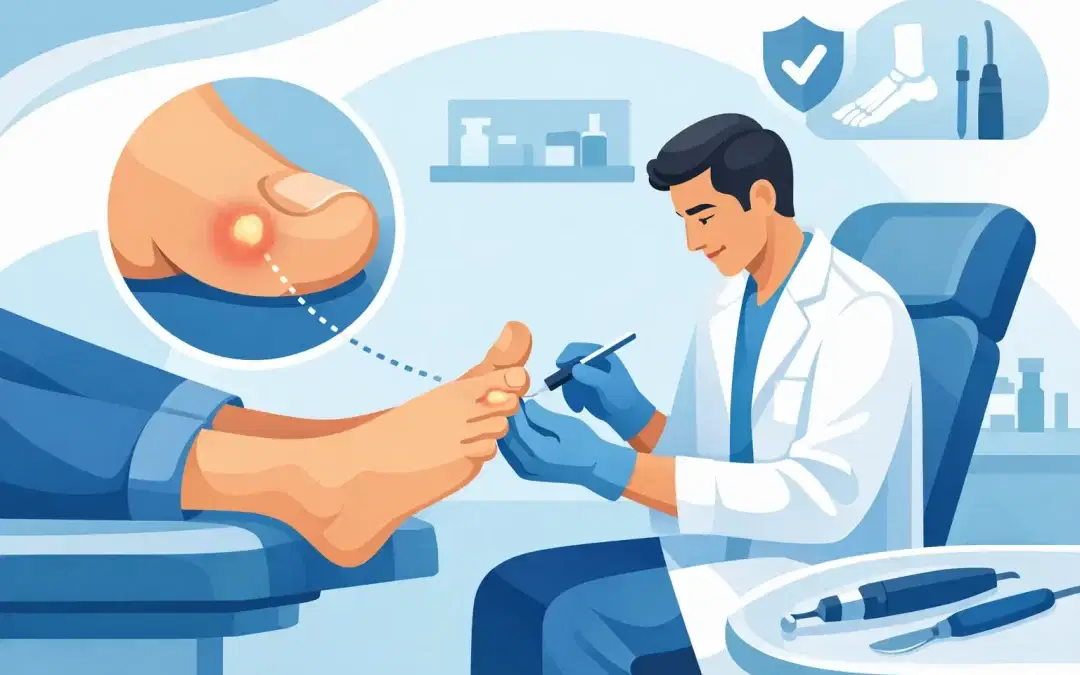
A corn can feel surprisingly sharp for something so small. When every step brings a pinpoint pain, it is natural to ask, how are foot corns removed and whether you can deal with one yourself. The safest answer is usually simple: a podiatrist can carefully remove the hardened skin and then help identify the pressure or friction that caused it.
A corn is not simply dry skin. It is a concentrated area of hard skin that develops when the foot is repeatedly rubbed or compressed. The centre can press into the deeper tissues as you walk, which is why corns may feel as though there is a stone in your shoe.
What is a foot corn?
Corns commonly develop on the tops or sides of toes, between toes, or on weight-bearing areas of the sole. Hard corns tend to form where there is direct pressure, often over a toe joint or beneath the ball of the foot. Soft corns are more likely to occur between the toes, where moisture keeps the skin pale and softer.
They can be caused by shoes that are too tight, too narrow or too loose, as well as prominent toe joints, bunions, hammertoes, changes in walking pattern and high activity levels. A corn may also return if the pressure on that part of the foot has not changed.
It is worth getting a painful spot checked rather than assuming it is a corn. Verrucae, callus, small foreign bodies and some skin conditions can look similar but need different management. A podiatrist will assess the area before treating it.
How are foot corns removed in a podiatry appointment?
A podiatry appointment begins with looking at the painful area and asking about your footwear, activity, medical history and how long the problem has been present. Your clinician will also check the general condition of your skin, circulation and sensation where appropriate.
If it is a corn, the usual treatment is careful reduction of the hard skin using sterile podiatry instruments, often including a scalpel. This is a controlled, precise procedure carried out by a trained practitioner. The aim is to remove the build-up around and within the corn without damaging healthy skin.
Many people feel relief quickly because the concentrated pressure has been taken away. If the corn has been particularly deep or the skin is very tender, it may remain sensitive for a short time, but treatment should not be a test of endurance. Tell your podiatrist if anything feels uncomfortable.
A corn does not have roots in the way people sometimes imagine. What can feel like a root is the dense central plug of hard skin pressing downwards. Removing this plug can make a substantial difference, but it will not necessarily prevent a future corn if the original rubbing or pressure continues.
Treatment is more than removing hard skin
The most useful part of a podiatry visit is often the plan that follows treatment. Depending on the cause, this might include advice on shoe shape and fit, a simple toe separator, cushioning, padding or an insole to redistribute pressure. In some cases, changing the style of shoe worn for work, walking or exercise is enough to make recurrent corns far less troublesome.
This is why it depends on the individual. A corn caused by a one-off pair of narrow occasion shoes may settle once those shoes are avoided. A corn related to toe shape, a bunion or altered foot mechanics may require occasional maintenance treatment alongside pressure relief.
Can you remove a corn at home?
It is tempting to cut, dig or shave at a corn when it is making walking difficult. This is not recommended. Blades, corn cutters and sharp tools can easily remove too much skin, cause a wound or introduce infection. The risks are higher than they may appear when you are working on your own foot, particularly if you cannot see the area clearly.
Over-the-counter corn treatments often contain salicylic acid, which breaks down hard skin. These products can be useful for some people when used exactly as directed, but they can also irritate or burn healthy surrounding skin. They do not address the mechanical cause of the corn.
Do not use acid treatments or attempt self-removal if you have diabetes, poor circulation, reduced sensation in your feet, neuropathy, a history of foot ulcers, or an immune condition affecting healing. Seek professional foot care instead. The same applies if the skin is broken, red, hot, swollen or leaking fluid.
For a straightforward corn, keeping feet clean and dry, wearing roomy footwear and using appropriate cushioning can reduce irritation while you arrange an appointment. Avoid putting thick, makeshift padding directly on top of the corn, as this can sometimes increase pressure in a shoe.
Why do foot corns keep coming back?
Removing a corn deals with the symptom that is hurting today. Preventing it from returning means reducing the force that made the skin thicken in the first place. Feet are remarkably good at protecting themselves: if an area is repeatedly compressed, the skin responds by becoming tougher. Unfortunately, that protection can become painful.
Look closely at when the corn hurts. If it is worse in work shoes, boots or trainers, the toe box may be too shallow, narrow or restrictive. If it is painful after longer walks, the issue may be repetitive pressure beneath the foot. Footwear that has worn unevenly can also change how weight travels through the sole.
A podiatrist can advise on practical changes without pushing unnecessary treatment. Some people need a one-off removal and better-fitting shoes. Others benefit from periodic care because of longstanding changes in toe position, arthritis or mobility. The right approach is patient-centred and based on what is causing your discomfort.
When to book a podiatry appointment
Book an assessment if a painful hard area is affecting your walking, work, exercise or choice of shoes. It is also sensible to seek advice if you are unsure whether the lesion is a corn or verruca, if it returns regularly, or if home measures have not helped.
Prompt assessment matters if there are signs of infection or a wound: increasing pain, heat, swelling, spreading redness, discharge or an unpleasant smell. People with diabetes or circulation and sensation problems should have new foot concerns reviewed early rather than waiting for them to worsen.
At The Wellhead Practice, podiatry care is designed to be straightforward, respectful and practical. You can self-refer for an appointment, with no GP referral required, and your treatment plan can focus on both immediate comfort and reducing the likelihood of the problem returning.
Your feet carry you through work, errands, exercise and the everyday moments that keep life moving. A painful corn may be small, but you do not need to keep putting up with it. Safe professional treatment and a sensible look at the cause can make each step feel more comfortable again.