
A blocked ear can make ordinary conversations feel distant, leave your own voice booming in your head and make hearing aids less effective. Ear irrigation for blocked ears may be a straightforward way to remove a build-up of ear wax, but it is not the right treatment for every ear or every symptom. A proper assessment comes first.
Ear wax is normal and useful. It helps protect the ear canal from dirt, water and irritation, and most ears naturally move it outwards over time. Problems arise when wax becomes hard, dry or tightly packed, or when it is pushed deeper into the canal by cotton buds, fingers or in-ear devices.
When ear irrigation for blocked ears can help
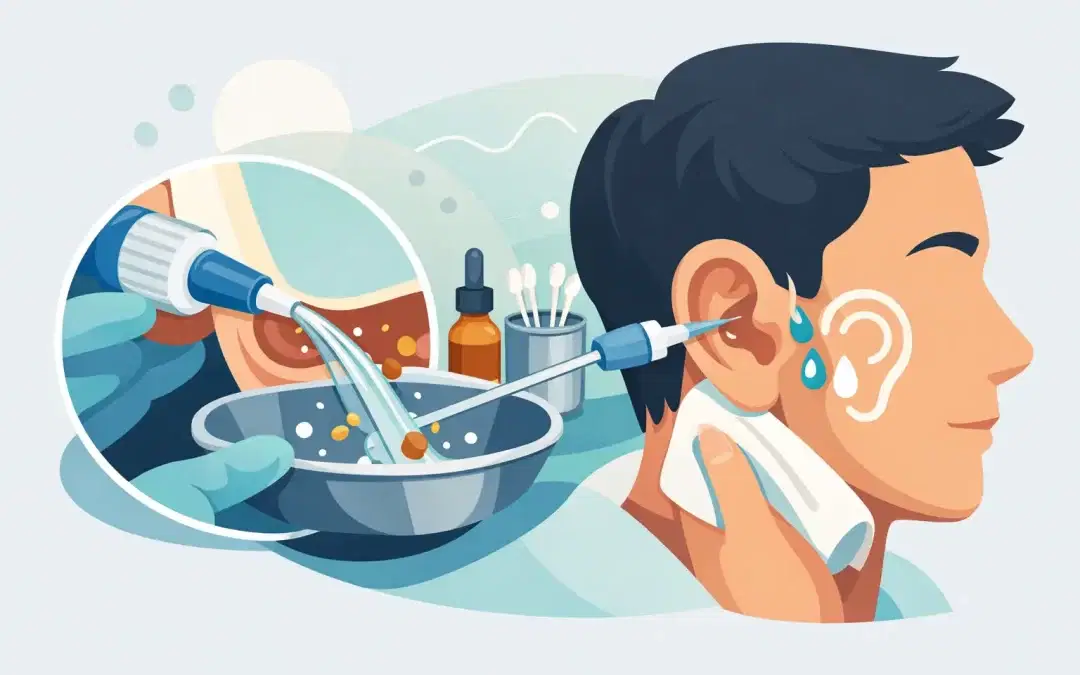
Irrigation uses a controlled flow of warm water to loosen and wash wax from the ear canal. It can be an effective option where wax is visible, suitable for irrigation and causing symptoms such as muffled hearing, a feeling of fullness, itching or mild discomfort.
Before treatment, a qualified clinician should look inside the ear. This matters because the sensation of blockage does not always mean wax is the cause. Congestion from a cold, an ear infection, fluid behind the eardrum, skin irritation or a hearing problem can all feel similar. Irrigating an ear when wax is not present will not solve the issue and may make an already irritated ear feel worse.
When wax is suitable for removal by irrigation, the procedure is usually quick. The water is warmed close to body temperature, then introduced gently into the ear canal using appropriate equipment. The clinician monitors how you are feeling throughout and checks the ear again once the wax has cleared.
Some people notice an immediate improvement in hearing. Others simply realise how much the blockage had been affecting them when the pressure and muffled sensation disappear. If the wax is particularly dry or compacted, it may take more than one attempt or a different removal method may be preferable.
Why an ear check should come before treatment
A safe approach to wax removal is not just about getting the wax out. It is about choosing the method that suits the ear in front of the clinician.
Ear irrigation is avoided if you have, or may have, a perforated eardrum, grommets, a history of ear surgery, an active ear infection, significant ear pain or discharge. It may also be unsuitable if you have had complications with irrigation in the past. In these circumstances, micro-suction is often considered instead, or you may need advice from another healthcare professional first.
Micro-suction removes wax using a small suction device while the clinician views the ear canal. It does not use water, which can make it the better choice for some people and some ear histories. Neither method is automatically superior in every situation. The best option depends on the consistency and position of the wax, the condition of your ear canal and eardrum, and your individual medical history.
This is why over-the-counter kits and home remedies need care. Wax-softening drops can be useful when used as directed and when there is no reason to avoid them, but putting objects into the ear is a common cause of impacted wax. Cotton buds may remove a little wax from the outer ear, yet they frequently press the rest further down. Ear candles are not a safe wax-removal method and can cause burns, wax blockage and injury.
What to do before your appointment
If you suspect wax is causing your blocked ear, softening the wax beforehand can make professional removal easier and more comfortable. Olive oil ear drops are commonly used for this purpose, provided you have no ear pain, discharge, known perforation, grommets or previous advice not to use drops.
Use the drops exactly as advised on the product or by your clinician. They do not need to dissolve the wax completely. Their job is to soften it so it can be removed more readily. It is also normal for drops to make your hearing seem temporarily worse, as the oil moves around the wax.
When booking, mention any history of perforated eardrums, ear operations, recurrent infections, grommets, sudden hearing changes or dizziness. This gives the clinician the information needed to plan the safest appointment. At The Wellhead Practice, patients can self-refer for a professional ear-wax assessment without needing a GP referral.
What ear irrigation feels like
Most people describe irrigation as unusual rather than painful. You may hear the sound of water in the ear and briefly feel movement or pressure. The water must be at the right temperature because water that is too cool or too warm can cause temporary dizziness or nausea.
Tell the clinician straight away if you feel pain, sharp discomfort, strong dizziness or unwell during treatment. The procedure can be paused or stopped. Good care is never about persisting with a technique that is not comfortable or appropriate for you.
Afterwards, the ear may feel slightly damp for a short time, and there can be mild tenderness if the canal was already irritated by impacted wax. This should settle quickly. Avoid inserting anything into the ear afterwards, even if it feels tempting to check that it is clear.
When a blocked ear needs medical advice first
Wax is common, but certain symptoms need more urgent assessment rather than routine wax removal. Seek medical advice promptly if you have sudden or rapidly worsening hearing loss, severe ear pain, discharge or bleeding, marked dizziness, a high temperature, facial weakness, or a persistent blocked feeling with no wax found.
Sudden hearing loss in particular should not be assumed to be wax. It can be time-sensitive, so contact an urgent healthcare service on the same day. Similarly, pain following an injury, an object in the ear, or a possible infection should be assessed before any wax-removal procedure is considered.
For people who use hearing aids, have narrow ear canals or experience recurring wax build-up, planned checks can be helpful. There is no need to remove wax simply because it is present – only when it is causing symptoms, preventing an ear examination or affecting hearing devices. Some people need occasional maintenance, while others may go years without needing treatment.
Keeping ear wax from becoming a recurring problem
The simplest long-term habit is to leave the ear canal alone. Clean only the outer ear with a damp cloth, and avoid cotton buds, hair grips and other objects. If you regularly develop hard wax, a clinician may suggest occasional softening drops as part of a sensible maintenance routine.
It also helps to consider what may be contributing. Hearing aids, earplugs and in-ear headphones can reduce the ear’s natural ability to move wax outwards. They do not need to be avoided altogether, but regular checks may prevent a small build-up becoming a frustrating blockage.
A blocked ear is often easily resolved, but it deserves a careful look rather than a one-size-fits-all remedy. A professional assessment can confirm whether wax is the problem, select irrigation or micro-suction where appropriate, and help you get back to hearing clearly and comfortably.