
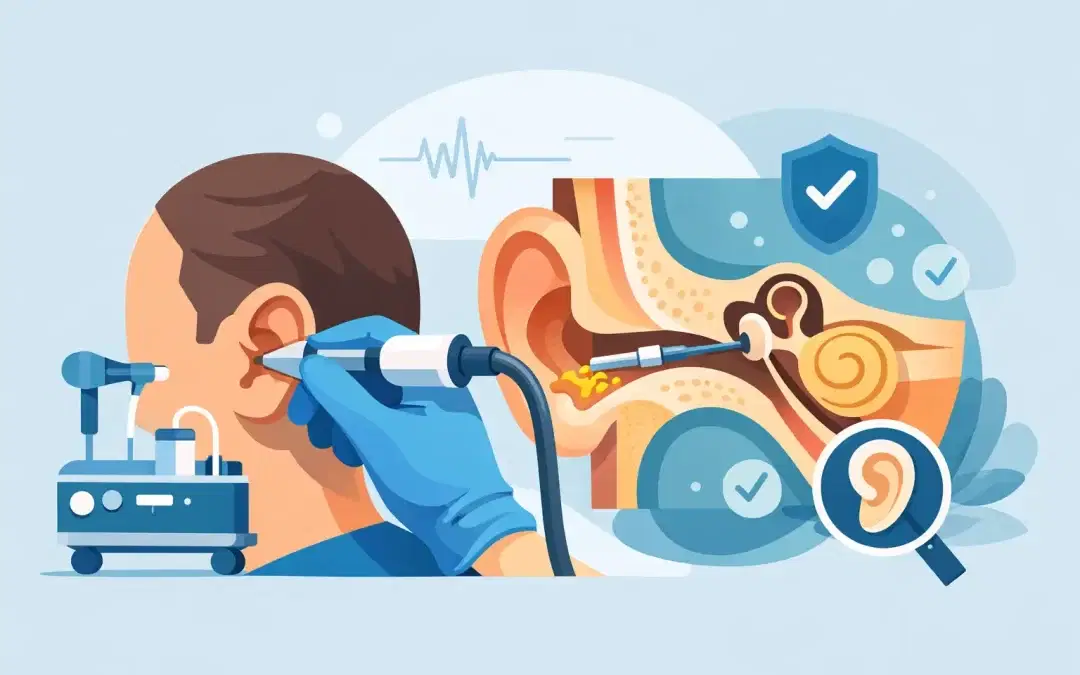
A blocked ear can make a familiar room sound strangely distant. Voices become muffled, your own voice may boom in your head, and hearing aids can become less effective. It is understandable to want it sorted quickly, but is ear microsuction safe? In the hands of a properly trained clinician, for the right patient and after an appropriate ear assessment, it is generally a safe and effective way to remove ear wax.
It is not completely risk-free, and it is not suitable for every ear. The safest approach is not simply choosing a method of wax removal, but making sure it is carried out by someone who can assess your ear, explain the options and stop if treatment is not appropriate.
What ear microsuction involves
Microsuction is a method of removing ear wax using a small, low-pressure suction device. The clinician looks into the ear canal using magnification and lighting, then carefully removes wax while being able to see where the suction tube is positioned.
That direct view is one reason many people prefer microsuction. Unlike irrigation, it does not involve putting water into the ear canal. This can make it a useful option for people who cannot have irrigation, although suitability always depends on the individual ear and medical history.
Appointments are usually straightforward. Your clinician will ask about your symptoms, hearing, previous ear problems, surgery, perforated eardrums, grommets, infections and any pain or discharge. They will examine the ear before deciding whether wax removal can go ahead safely.
Is ear microsuction safe for most people?
For most adults with ordinary wax build-up, professional microsuction is well tolerated. It is commonly used because it allows controlled removal under direct observation, without the use of water. Many patients find it quick, particularly when wax has been softened beforehand and is not tightly packed or extremely dry.
However, “safe” does not mean there is no possibility of discomfort or side effects. The ear canal is narrow and sensitive. The suction device can sound loud because the noise is close to the eardrum, and some people notice brief dizziness, coughing or a sensation of pressure during treatment. These effects are usually short-lived.
Occasionally, microsuction may irritate the skin of the ear canal or cause minor trauma. Less commonly, it can trigger ringing in the ear, dizziness, pain or a small amount of bleeding. More significant injury is unusual, but any procedure around the eardrum needs careful technique and sound clinical judgement.
This is why professional assessment matters. A clinician should not push on with wax removal simply because an appointment has been booked. If the wax is too hard, the canal is inflamed, the view is poor or the history raises concerns, the right decision may be to pause, soften the wax further, treat another issue first or refer you for specialist advice.
Why the person carrying it out matters
Microsuction is not a home treatment. Using suction devices, cotton buds, hair grips or ear candles at home can push wax deeper, damage the ear canal or leave a problem untreated. Ear candles are not a safe wax-removal method and can cause burns or blockages from candle wax.
A trained ear-care clinician does more than remove wax. They check whether wax is actually the cause of your symptoms. Earache, hearing changes, tinnitus, dizziness, discharge and a feeling of blockage can have other causes, including infection, an eardrum problem or a foreign body in the ear.
At The Wellhead Practice, ear-wax removal appointments are approached as patient-centred care rather than a one-size-fits-all service. That means listening to what has changed, examining the ear and recommending only the treatment that is needed. For many people in Bourne and the surrounding villages, prompt access is helpful, but it should never come at the expense of a careful assessment.
When microsuction may not be the right choice
Microsuction can still be appropriate for people with a history of ear problems, but this needs more consideration. Tell the clinician before your appointment if you have had ear surgery, a perforated eardrum, grommets, recurrent ear infections, mastoid surgery, severe vertigo or sudden changes in hearing.
You should also seek medical advice rather than booking routine wax removal if you have significant ear pain, discharge, bleeding, a fever, sudden hearing loss, new severe dizziness or facial weakness. Wax may be present, but it may not be the whole story. Sudden hearing loss in particular needs urgent assessment.
If you use hearing aids, recurrent wax build-up is common. Regular professional checks can be useful, but repeated removal should not be automatic. Your clinician may discuss how often you genuinely need appointments, whether your hearing aids are contributing to wax retention and whether drops or a different maintenance routine could help.
How to make microsuction more comfortable and effective
Wax that is soft is usually easier and more comfortable to remove. Unless you have been advised not to use them because of a perforation, ear surgery or another ear condition, olive oil ear drops may be recommended for a few days before your appointment. Follow the instructions given by your clinician rather than using large quantities or continuing for weeks without advice.
Do not use cotton buds to “clean” inside your ears. Ears normally move old wax out naturally. Cotton buds tend to compact wax further down the canal, where it is harder to remove and more likely to cause blockage.
On the day, mention anything that could affect your treatment, even if it seems unrelated. This includes blood-thinning medication, a past reaction to ear treatment, recent ear infection or a history of feeling faint or dizzy during procedures. If the sound of suction feels uncomfortable, say so. A good clinician can work at a pace you can tolerate and explain what is happening as they go.
What to expect afterwards
Many people notice clearer hearing immediately after wax removal. Others need a little time to adjust, especially if the ear has been blocked for a while. The ear can feel unfamiliar when normal sound returns, and hearing aids may need their volume adjusted back to usual settings.
A mild, temporary sensitivity is possible, particularly if the canal was tightly blocked or the wax was dry. Avoid putting anything into the ear afterwards unless you have been advised to do so.
Contact the clinic or seek medical advice if you develop increasing pain, persistent dizziness, discharge, bleeding, worsening tinnitus or a noticeable reduction in hearing after treatment. These symptoms are not what most people experience, but they should not be ignored.
A sensible choice for blocked ears
Microsuction is often a safe choice when ear wax is causing troublesome blockage, provided it is carried out after a proper assessment by a trained professional. Its main advantage is precision: the clinician can see the wax and the ear canal while working, rather than relying on guesswork.
If your hearing is muffled or your ear feels blocked, resist the temptation to fix it yourself. A calm, professional examination can establish whether it is wax, whether microsuction is suitable and, just as importantly, whether you need a different kind of care to get comfortably back to hearing the world as you should.