
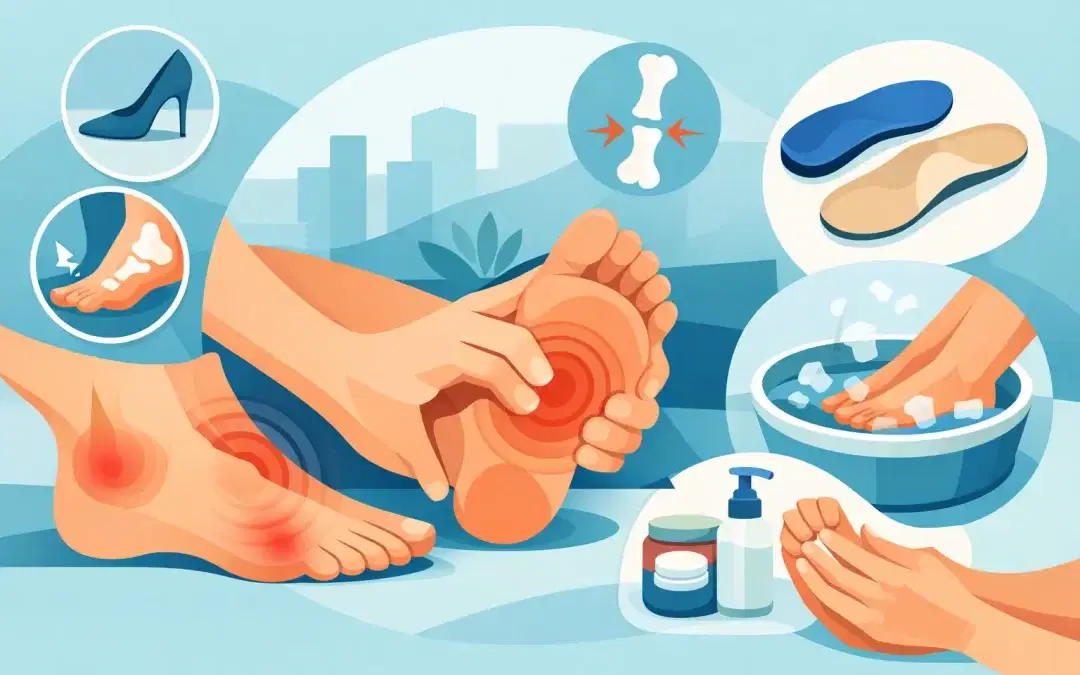
A sharp ache under the heel when you first get out of bed, burning across the ball of the foot after a long shift, or toes that feel crowded in your usual shoes can quickly change how you walk, work and exercise. If you are asking, “why do feet hurt?”, the answer is not always simply that you have been on them too long. Feet absorb a great deal of force every day, and pain can come from the skin, nails, joints, tendons, nerves or the way the rest of the body is moving.
Why do feet hurt? Start with the pattern of pain
The location, timing and character of pain provide useful clues. Pain beneath the heel that is worst with the first few steps in the morning may be linked to irritation of the plantar fascia, the strong band of tissue supporting the arch. It often eases a little once you get moving, then returns after prolonged standing or walking.
Pain at the front of the foot, around the ball of the foot or between the toes, is commonly related to pressure from footwear, repetitive loading or changes in the way weight is distributed. A burning, tingling or numb feeling needs particular attention, as it can indicate nerve irritation. Pain at the back of the heel may involve the Achilles tendon or irritation where footwear rubs.
It is also worth considering what changed before the pain started. A new job involving more standing, a return to running, a holiday with more walking, worn-out trainers, a change in body weight or an old injury can all alter the load through your feet. Sometimes symptoms build gradually; sometimes one awkward step makes an existing issue impossible to ignore.
Common reasons for painful feet
Footwear that does not match the job
Shoes do not have to look unsuitable to cause trouble. A narrow toe box can compress toes and aggravate corns, bunions or nerve symptoms. Thin soles may offer little cushioning on hard floors, while shoes with poor support can make a sore heel or arch work harder. Conversely, a shoe that is very stiff or heavily supportive may not suit every foot or activity.
For people in manual work, retail, healthcare or any role involving hours on their feet, the right work shoe matters as much as a comfortable pair of trainers does for exercise. Look for enough room at the toes, a secure heel, cushioning appropriate to your activity and a fastening that holds the foot comfortably. Replace footwear when the sole is noticeably worn unevenly or cushioning has flattened.
Overuse and a sudden increase in activity
Feet and lower legs adapt to load, but they need time. A rapid increase in running distance, hill walking, gym sessions or simply daily step count can irritate tendons, joints and the tissues beneath the foot. Standing still for a long time can be just as demanding as walking, particularly on concrete floors.
The sensible approach is rarely to push through worsening pain. Reducing the aggravating activity for a short period, then building back gradually, gives tissues a chance to settle. Complete rest is not always necessary or helpful, but the right balance depends on the cause and severity of symptoms.
Heel and arch pain
Plantar heel pain is one of the most frequent reasons people seek podiatry care. It can be associated with plantar fascia irritation, calf tightness, a change in activity or prolonged time on hard surfaces. Flat feet, high arches and reduced ankle movement may all influence how force is managed, but there is no single foot shape that explains every case.
Stretching the calf and the sole of the foot can help some people, as can supportive footwear and avoiding bare feet on hard floors while symptoms are acute. However, exercises need to be appropriate. If pain is persistent, a podiatry assessment can identify whether the plantar fascia is the likely source or whether another structure is involved.
Toe, nail and skin problems
A painful foot is not always a biomechanical problem. Hard skin, corns, cracked heels, fungal infection, verrucae and ingrowing toenails can make every step uncomfortable. Corns are often a sign of repeated pressure or friction, so simply removing them without considering footwear, toe shape or gait may only provide short-term relief.
Ingrowing toenails can become particularly painful when the surrounding skin is swollen, hot or leaking fluid. Trying to cut deeply into the corner yourself can make matters worse. Professional treatment can deal with the immediate problem and help reduce recurrence.
Arthritis, bunions and joint changes
Stiff, swollen or aching joints in the foot may be related to osteoarthritis, inflammatory arthritis, a bunion or previous injury. A bunion is not just a cosmetic change at the base of the big toe. It can alter shoe fit, create rubbing and affect how you push off when walking.
Symptoms may fluctuate. Some people are comfortable with wider footwear, padding or changes in activity, while others need more tailored management. New swelling, warmth or pain that is becoming more severe should be assessed rather than assumed to be ordinary wear and tear.
Nerve and circulation-related symptoms
Pins and needles, burning, altered sensation or numbness are different from a straightforward muscular ache. Nerve symptoms can arise from pressure in the forefoot, the lower back or conditions such as diabetes. Poor circulation can also affect the feet, particularly if they feel unusually cold, change colour or develop wounds that heal slowly.
These symptoms deserve proper clinical advice, especially for anyone with diabetes, reduced sensation, known circulation problems or a history of foot ulcers. Small areas of rubbing can become more significant when sensation or healing is impaired.
What you can do before an appointment
If the pain is mild, has no obvious warning signs and followed a clear increase in activity, a few practical changes may settle it. Choose supportive, well-fitting footwear, reduce the activity that clearly triggers pain and use relative rest rather than forcing long walks or runs. A cold pack wrapped in a towel for short periods may ease soreness after activity.
Gentle calf and foot stretching can be useful for some heel and arch problems, provided it does not increase pain. Keep an eye on the pattern: note where it hurts, what time of day it is worst and whether particular shoes, surfaces or activities set it off. This information is genuinely useful during an assessment.
Avoid cutting corns, calluses or ingrowing nails yourself with blades or sharp instruments. Be cautious with over-the-counter medicated corn treatments too, particularly if you have diabetes, poor circulation or reduced feeling in your feet. They can damage healthy skin as well as the hard skin you are trying to treat.
When foot pain needs prompt attention
Some foot problems should not wait for a routine appointment. Seek urgent medical advice if you have any of the following:
- a foot that is suddenly very painful, swollen, red or hot, particularly if you feel unwell or have a fever;
- an inability to bear weight after an injury, or obvious deformity after a fall or twist;
- a wound, ulcer, spreading redness or discharge from the foot;
- a painful, pale, blue or unusually cold foot;
- new numbness or weakness, particularly if it is progressing; or
- any new foot wound or rapidly changing symptom if you have diabetes or known circulation problems.
A suspected fracture, infection, blood-flow problem or serious injury needs timely medical assessment. Do not try to walk it off.
How podiatry can help with ongoing foot pain
Persistent or recurrent pain is a good reason to see a podiatrist, particularly when it is affecting work, sleep, exercise or confidence when walking. An assessment looks beyond the sore area. It may include your footwear, foot posture, joint movement, skin and nail health, activity levels and the way you walk.
Treatment is patient-centred and evidence-based. Depending on the cause, it may involve practical footwear guidance, treatment for corns or nails, advice on pacing activity, exercises, padding, insoles or a referral onwards where appropriate. The aim is not to sell unnecessary repeat appointments, but to help you understand what is driving the problem and what gives you the best chance of staying comfortable.
At The Wellhead Practice, podiatry sits alongside osteopathy and sports massage, which can be useful when foot symptoms are part of a wider problem involving the calf, knee, hip or lower back. Not every sore foot needs several types of treatment, but having experienced primary healthcare practitioners in one local clinic can make it easier to take a joined-up view when needed.
Your feet do a demanding job without much complaint. If pain is changing the way you move or stopping you doing the things you enjoy, getting it assessed early can be far easier than waiting for a small problem to become a stubborn one.